At Carboxtrem, we use the most advanced technology on the market to make high-performance cycling components. Today we explain in detail what Carbon DLS (Digital Light Synthesis) technology is: the same technology brands such as Adidas, Specialized and Fizik use to create revolutionary products.
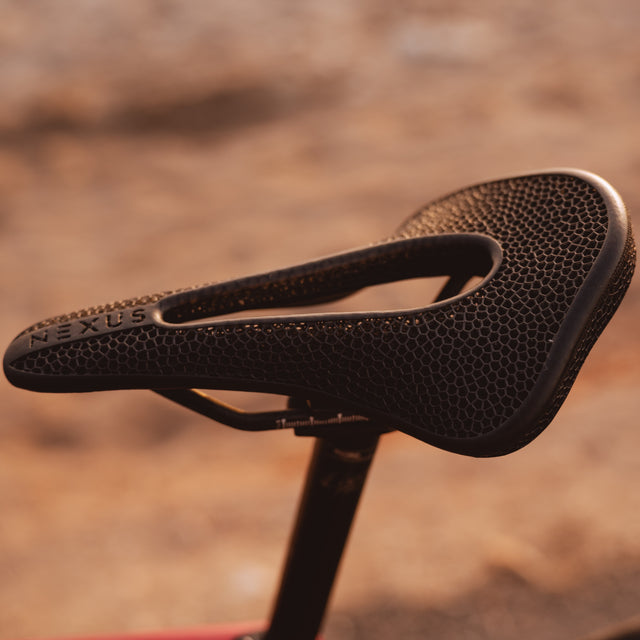
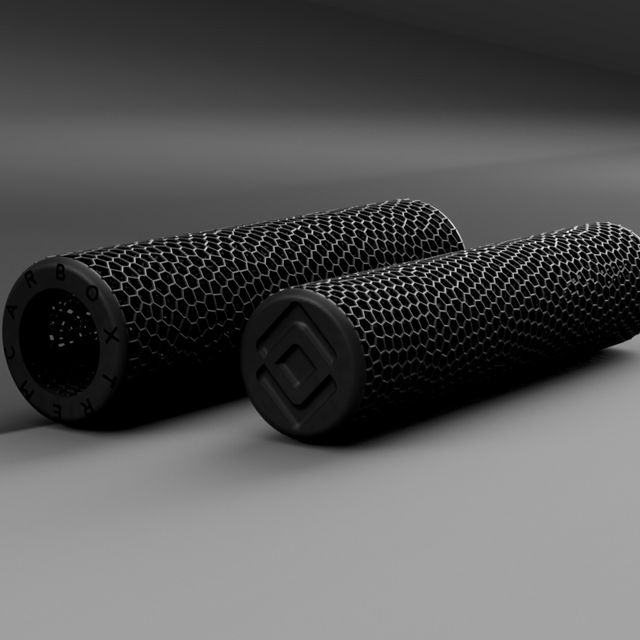
If you've ever wondered how we get our Race Day Grips to weigh just 22 grams while keeping exceptional strength, or how our 146-gram 3D Nexus saddles can withstand thousands of kilometres without degrading, the answer lies in this technology.
💡 Key fact: Carbon DLS can print parts up to 100 times faster than traditional 3D printing, while maintaining superior quality and isotropic mechanical properties.
What is Carbon DLS?
DLS stands for Digital Light Synthesis, a 3D printing technology developed by Carbon3D that has revolutionised additive manufacturing worldwide.
Components of DLS Technology
DLS technology combines three innovative elements working in perfect sync:
-
Programmable digital light projection
- A high-resolution UV projector projects sequential images
- Precise pixel-by-pixel control of polymerisation
- Resolution of up to 75 microns (0.075mm)
-
Programmable liquid resins
- Materials designed specifically for DLS technology
- Mechanical properties that can be optimised for each application
- At Carboxtrem we mainly use EPU 41, EPU 42 and EPU 46
-
Oxygen-permeable optics (CLIP window)
- A membrane that's permeable to oxygen but impermeable to resin
- Creates a "dead zone" that allows continuous printing
- Completely eliminates the traditional layer effect
DLS vs Traditional 3D Printing
| Feature | Traditional 3D Printing (FDM/SLA) |
Carbon DLS (Carboxtrem) |
|---|---|---|
| Production speed | Slow (layer-by-layer build) | ✅ Up to 100x faster |
| Surface finish | Visible layer lines | ✅ Smooth continuous surface |
| Mechanical properties | Anisotropic (weak between layers) | ✅ Isotropic (uniform) |
| Resolution | 100-300 microns | ✅ 75 microns |
| Series production | Not economically viable | ✅ Fully scalable |
| Available materials | Limited | ✅ Extensive library (EPU, RPU, SIL) |
| Complex geometries | Limited by supports | ✅ Advanced Voronoi lattices |
| Part durability | Weak point between layers | ✅ No weak points |
How Does DLS Technology Work?
CLIP process (Continuous Liquid Interface Production): Unlike other 3D printing methods, DLS doesn't build the part layer by layer with pauses between each level. Instead, the part emerges continuously from a bath of liquid resin, as if it were growing organically.
The Process Step by Step
1. Preparing the digital design
- 3D modelling with computationally optimised lattice structures
- Design of Voronoi lattices specific to the application
- Simulation of mechanical properties using specialised software
- Topology optimisation to reduce weight without compromising strength
2. Setting up the Carbon printer
- Material selection (EPU 41/42/46 according to application and requirements)
- Precise calibration of print parameters
- Loading liquid resin into the system
- Adjusting speed and resolution to the geometry
3. Continuous printing with CLIP technology
- The build platform is lowered into the liquid resin
- The UV projector selectively polymerises the resin from below
- The part rises continuously (not layer by layer)
- Oxygen in the CLIP window prevents premature adhesion
- Result: printing up to 100x faster with no layer lines
4. Post-processing at QDP.nl
- Washing with a specific solvent to remove uncured resin
- Thermal curing in an oven (120°C for 8 hours for EPU 41)
- This process completes the chemical reaction and optimises properties
- Dimensional inspection with precision equipment
5. Final quality control
- Dimensional verification to tolerances of ±0.3mm
- Mechanical strength and elongation tests
- Visual inspection of the surface finish
- Certification and packaging
The CLIP Window: The Secret of DLS
The key innovation of Carbon DLS is the CLIP window (Continuous Liquid Interface Production), a patented component that makes continuous printing possible:
How Does It Work?
- Oxygen-permeable membrane: Lets oxygen through but not liquid resin
- Dead zone: The oxygen creates a thin layer (20-30 microns) where the resin doesn't polymerise
- Continuous printing: The part can rise continuously with no mechanical separation
- No layer marks: The result is perfectly isotropic properties
⚡ Technical advantage: This eliminates the main weak point of traditional 3D printing: the bonds between layers. In traditional components, 80% of failures occur at these bonds.
DLS Materials: EPU Resins
At Carboxtrem we mainly work with the EPU (Elastomeric Polyurethane) family of resins:
EPU 41 - Our Main Material
Technical specifications:
| Property | Value | Standard |
|---|---|---|
| Shore A hardness | 70 | ASTM D2240 |
| Elongation at break | 300% | ASTM D412 |
| Operating temperature | -10°C to +40°C | - |
| Tear strength | 25 kN/m | ASTM D624 |
| Tensile modulus | 11.5 MPa | ASTM D412 |
| Certification | ISO 10993-10 | Biocompatibility |
Applications in our products:
- Race Day Grips
- 3D Nexus saddles (lattice structure)
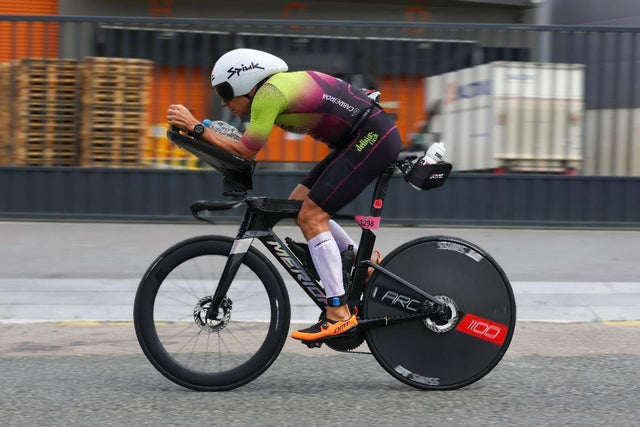
- Triathlon arm rests
EPU 46 - Sustainable Innovation
Key features:
- 100% stiffer than EPU 41
- 40% bio-based content (eco-friendly)
- Colour customisation directly in the resin
- Adjustable hardness: Shore 56A to 78A
- Solvent-free cleaning
Advantages of DLS for High-Performance Cycling
1. Total Customisation
- Every product adapts to the cyclist's exact geometry
- Lattice structures optimised by pressure zone
- Perfect fit guaranteed through biomechanical analysis
- No two parts are the same
2. Superior Mechanical Properties
- Isotropy: Uniform strength in all directions
- No weak points: There are no layer lines that can break
- Durability: Thousands of kilometres without degradation
- Fatigue resistance: Superior to traditional components
3. Impossible Geometries
- 3D Voronoi lattices: Impossible to make with traditional methods
- Differentiated cushioning zones: Firmness where it's needed, softness where it helps
- Integrated ventilation channels: Optimal breathability
- Complex lattice structures: Perfect distribution of forces
4. Extreme Lightness
- Computational topology optimisation
- Material only where it's structurally needed
- Real example: Saddles of just 146g strong enough for 120kg cyclists
- 30-40% weight reduction vs traditional components
5. Scalable Production
- Series production capacity while keeping customisation
- Perfect consistency between parts
- Manufactured at QDP.nl (Carbon Production Network)
- Predictable lead time: 5-7 days + 24-48h shipping
Brands That Trust Carbon DLS
Carbon DLS is the technology chosen by world leaders in sport and high performance:
Companies using Carbon DLS
- Adidas: 4D midsole in competition running shoes
- Specialized: S-Works Mirror and Power saddles with adaptive technology
- Fizik: Adaptive saddles for professional cycling
- Riddell: Sports helmets with optimised protection
- Carboxtrem: Custom cycling components
🏆 Official recognition: Carbon3D published an official case study on Carboxtrem in August 2024, highlighting our innovation in cycling components.
Our Manufacturing Process with DLS
Collaboration with QDP.nl
At Carboxtrem, we work closely with QDP.nl, our manufacturing partner based in the Netherlands and a certified member of the Carbon Production Network.

Why QDP.nl?
- ✅ Carbon Production Network certification: The highest quality standards
- ✅ Carbon L1 and M2 machines: The latest generation of DLS printing
- ✅ ISO-certified quality control: Full traceability
- ✅ High-performance experience: Products for professional athletes
- ✅ Scalable production capacity: From prototypes to thousands of units
From Design to Finished Product
Complete Carboxtrem manufacturing timeline:
- Week 0: Biomechanical measurements and needs analysis
- Weeks 1-2: 3D CAD design and computational simulation of structures
- Weeks 2-3: Manufacturing at QDP.nl with Carbon DLS technology
- Week 3: Post-processing, thermal curing and quality control
- Week 4: Final inspection and international express shipping
⏱ Total time: 5-7 days of manufacturing + 24-48h express shipping to Spain
DLS Technical Specifications
Typical Print Parameters
| Parameter | Value |
|---|---|
| XY resolution | 75 microns (0.075mm) |
| Z resolution | Variable (10-100 microns) |
| Build speed | 50-500 mm/hour (depending on geometry) |
| L1 build volume | 190 x 118 x 326 mm |
| M2 build volume | 189 x 118 x 326 mm |
| Dimensional accuracy | ±0.3 mm |
| EPU 41 curing temperature | 120°C for 8 hours |
| Surface finish | Ra < 6 μm (smooth with no post-processing) |
Applications in Our Products


Frequently Asked Questions (FAQ)
Yes, completely. All our products made with EPU 41 have passed ISO 10993-10 biocompatibility testing, the same certification held by medical products that come into contact with the skin.
With proper care, our DLS products can last years without significant degradation. We have professional cyclists who have ridden more than 15,000 km on the same Race Day Grips with no noticeable wear.
The investment in Carbon L1/M2 machines exceeds a million euros. Our strategy is to partner with QDP.nl, a certified member of the Carbon Production Network, which guarantees us the highest quality without compromising innovation in design, which is our strength.
EPU materials are technically recyclable through melt reprocessing. We're currently developing a take-back programme to give products a second life at the end of their useful life.
EPU 41: Softer (Shore 70A), better for impact absorption, ideal for grips and standard saddles.
EPU 46: Stiffer (up to Shore 78A), 40% bio-based, colour-customisable, better for structures that need more support.
Conclusion
Carbon DLS technology represents a qualitative leap in the manufacture of cycling components. It isn't just faster 3D printing; it's the ability to create impossible geometries, optimise mechanical properties and offer total customisation at industrial scale.
At Carboxtrem, this technology allows us to make the lightest, strongest and most customised components on the market. Every Race Day Grip, every 3D Nexus Saddle, every arm rest that leaves our production line at QDP.nl is the result of combining:
- ✨ Advanced computational design
- ✨ Latest-generation materials (EPU 41/42/46)
- ✨ Revolutionary manufacturing technology (Carbon DLS)
- ✨ Exhaustive quality control (ISO certified)
The result? Products that professionals and amateurs choose to take their performance to the next level.
Resources and Links
Official Carbon3D website - DLS Technology
📄 Carboxtrem Case StudyCarbon3D's official publication about our products
⚗️ EPU 41 materialFull technical specifications
🌱 EPU 46 materialEPU 46 specifications (40% bio-based)
🏭 QDP.nlOur manufacturing partner - Carbon Production Network
🛒 Race Day GripsView product in our shop
🛒 NEXUS 3D SaddleView product in our shop
🛒 All ProductsFull Carboxtrem catalogue
Any Questions?
Our team is here to help you better understand the technology behind our products or to advise you on choosing the perfect component for your discipline.
info@carboxtrem.com
+34 679 65 17 37
carboxtrem.com
Riera d'Aragó 9, 43204 Reus, Tarragona, Spain