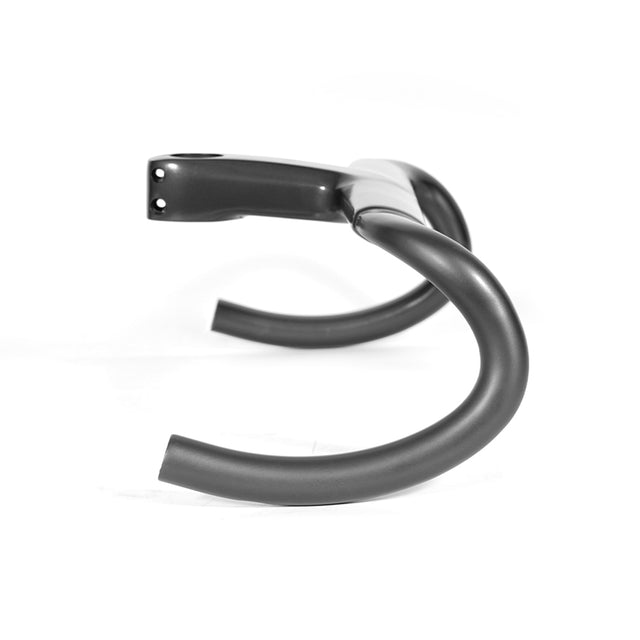
CarboXtrem TT Aerobars
€890,00
CARBOXTREM
Pre-launches, custom-fit tips and offers for your bike. No spam: only what is worth it.
Already have an account? Sign in19/08/2026 · Alfonso Lopez Pe

"3D printed" has become a marketing hook. You'll find it on 30-euro saddles, on bargain-bin accessories and on parts that deform after two months. The problem is that it lumps together two worlds that have nothing in common: a home fused-filament printer… and the industrial technology used to make our lattices.
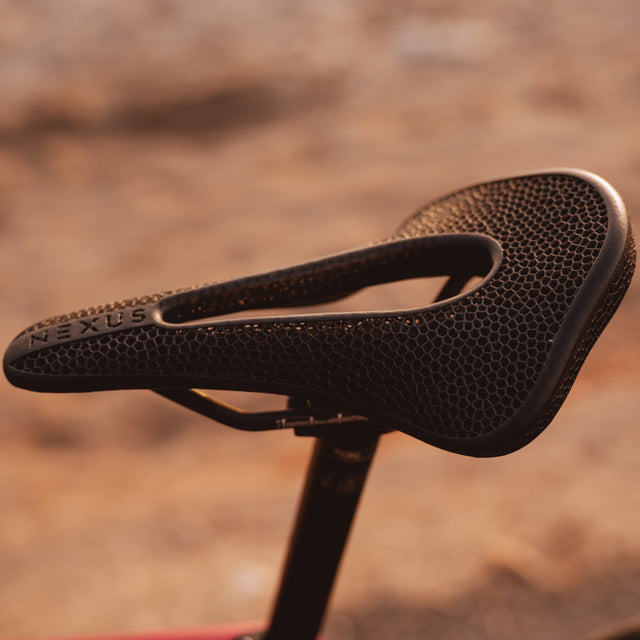
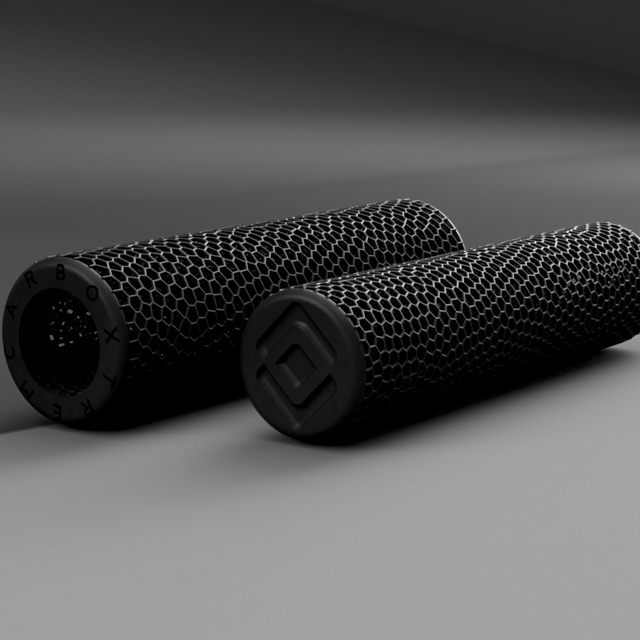
At CarboXtrem we don't improvise that part. We design the lattices (the geometry, the density by zone, the fit for each rider) and the manufacturing is carried out by our partner QDP, in the Netherlands, a member of the Carbon Production Network and a specialist in Carbon DLS technology. That is where the NEXUS saddle, the Race Days grips and the aerobar arm rests come from. We explain how and why it matters.
Carbon's DLS technology doesn't "deposit" plastic: it makes the part with light. A liquid resin is cured continuously by projecting ultraviolet light through an oxygen-permeable window. The result is an isotropic part (equally strong in every direction), with no visible layers or the typical fracture planes of FDM printing.
What matters for a contact lattice is this: with a mould you can't create millions of interconnected hollow cells, and neither can you with a filament printer at that level of detail. With DLS you can. That makes it possible to build lattice structures that are impossible to mould, in which every cell does its job: stiff where you need to push, soft where you rest, and hollow so it breathes.
Our lattices are printed in EPU 41, an elastomeric polyurethane from Carbon designed for parts that flex and spring back. Its properties, set out in the official case study Carbon published about our products, are exactly what cycling calls for:
Carbon's chemistry doesn't stand still. Beyond EPU 41, the elastomer family is evolving towards the new EPU Pro resins, a generation aimed at fine-tuning the balance between elasticity, strength and recovery even further. At CarboXtrem we are already working with QDP to incorporate them, which opens the door to even better-tuned lattices and new products. We'll dedicate an in-depth article to them when they reach the catalogue.
Here is the difference you can't see in the photo. CarboXtrem (Reus, Spain) designs every lattice: it defines the lattice geometry, tunes the density zone by zone and adapts it to the rider's weight and contact point. That part —the product's "brain"— is ours.
Production is handled by QDP (Duiven, Netherlands), a member of the Carbon Production Network —which features this collaboration in its own case study. It isn't a printer in a garage: it's a qualified industrial manufacturer within the Carbon ecosystem, which guarantees repeatability, quality control and consistency unit after unit. In-house design + certified European manufacturing = a part you can trust, not a generic "3D print".
Everything at CarboXtrem that touches your body in position —where comfort and pressure are what matter— uses this lattice:
| Product | Weight | Key data |
|---|---|---|
| NEXUS 3D Carbon Saddle | ~145 g (with 2 cm of pad) | 240 × 140 mm, 160 mm support surface, Voronoi-style design, EPU 41 |
| Race Days Grips | 22-30 g / pair | 28 or 34 mm thick, vibration absorption |
| Arm rests (kit) | < 150 g the kit | 17 mm thick, pressure distribution on the forearm |
They are all customisable, with multi-zone cushioning and a breathability that is impossible in solid foam.
When you see a "3D printed saddle" at a bargain price, it's almost always FDM or a shaped foam: it sinks, packs down, doesn't breathe and doesn't fit anyone. Ours is the opposite: Carbon material (EPU 41), DLS technology, manufacturing within the Carbon Production Network and a design we fine-tune for each rider.
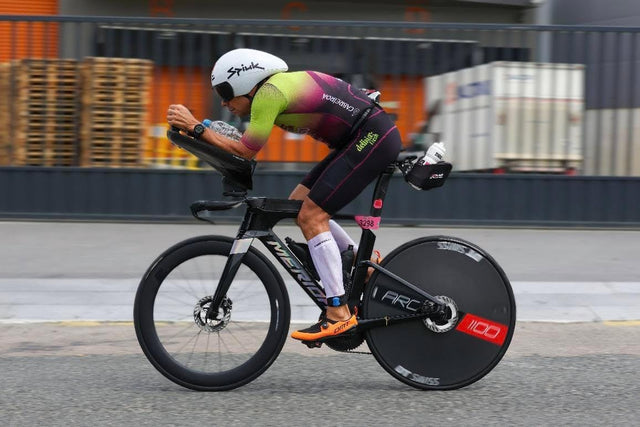
This isn't theory: thousands of units of each product have been sold and they have been tested by professional cyclists in different disciplines. A well-made 3D lattice isn't a fad; it is simply the best known way to be light, comfortable and breathable at the same time.
Carbon provides the technology (DLS) and the material (EPU 41). QDP provides qualified European manufacturing. And CarboXtrem provides the design and the fit for each rider. That chain is what separates a real 3D lattice from just any "3D print".
Want to feel it where it matters most? Start with the contact point that covers the most kilometres: the NEXUS 3D Carbon Saddle.
Topics