CarboXtrem TT Aerobars
€890,00
CARBOXTREM
Pre-launches, custom-fit tips and offers for your bike. No spam: only what is worth it.
Already have an account? Sign in06/06/2026 · Alfonso Lopez Pe

However expensive your bike is, you never touch the frame, the wheels or the groupset. Your body only connects with the machine at three points: the hands (on the handlebar), the seat (on the saddle) and the feet (on the pedals). All the power you generate goes out through them, and all the comfort —or lack of it— comes in through them.
It's a simple idea with a huge consequence: the upgrade with the most impact per euro spent is almost never the most expensive component, but those three contact points. A high-end frame won't save you from a handlebar that flexes, a saddle that hurts after two hours or a grip that leaves your hands numb. In this article we go over all three, what each one needs and how we solve them at CarboXtrem.
Think of a long ride. You don't give up because the frame weighs 200 grams too much: you give up —or slow down— because your neck hurts, because your hands go numb or because you can't find a comfortable position on the saddle. Sustained performance isn't decided by your peak power; it's decided by how many hours you can hold a good position before your body asks you to stop.
And the other way round: when a contact point is stiff and precise, every movement turns into control. A handlebar that doesn't move gives you a clean line on a fast descent; a saddle that spreads pressure well lets you put out watts without standing up every five minutes. Optimising these three points is simply the most efficient way to go faster and more comfortably at the same time.
Of the three, the handlebar is the one that makes the most decisions for you. It's how you steer, how you brake and how you transmit the weight of your upper body. Two things matter here: stiffness and aerodynamics.
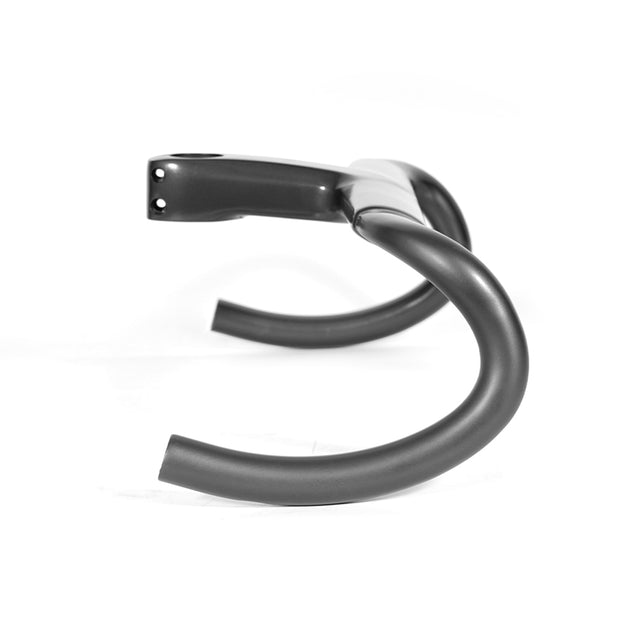
Stiffness matters because any flex in the cockpit is precision you lose just when you need it most: in a tight corner, on a short steep climb flat out or dodging an obstacle at the last moment. That's why a one-piece integrated cockpit, like the CarboX17 Handlebar, makes the difference: by eliminating the joint between stem and handlebar, the point that moves the most disappears. Every watt you put in goes to the wheel instead of being lost to flex.
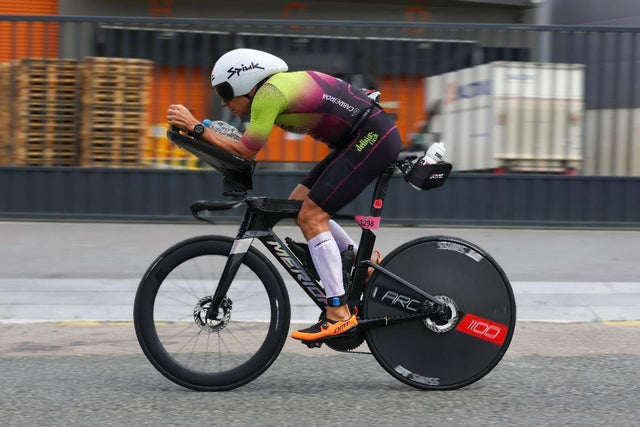
And then there's the air. On road and gravel, the front of the rider and bike is where most drag is generated. An integrated, clean, continuous profile —with no bolts or caps facing the wind— lets the air slip past. The CarboX17 is made from T1000-grade carbon fibre and joins stem and handlebar in a single structure: stiffer, more aerodynamic and lighter than two bolted parts. Its flat top also gives you an extra hand position for long rides.
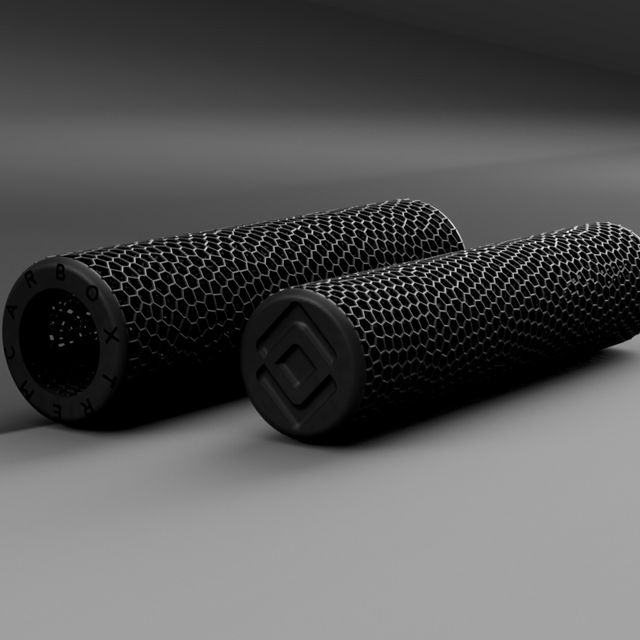
In MTB, aggressive gravel or enduro, the same principle carries over to grip: the Race Day Grips, 3D printed in EPU 41 resin, absorb vibration and reduce hand fatigue, weighing just 16 grams per set. Less vibration in your hands literally means more kilometres with fingers that respond on the brake.
The saddle is the contact point with the worst reputation, almost always for the same reason: for years you had to choose between lightness and comfort. It was either light and like a plank, or comfortable and as heavy as a brick.
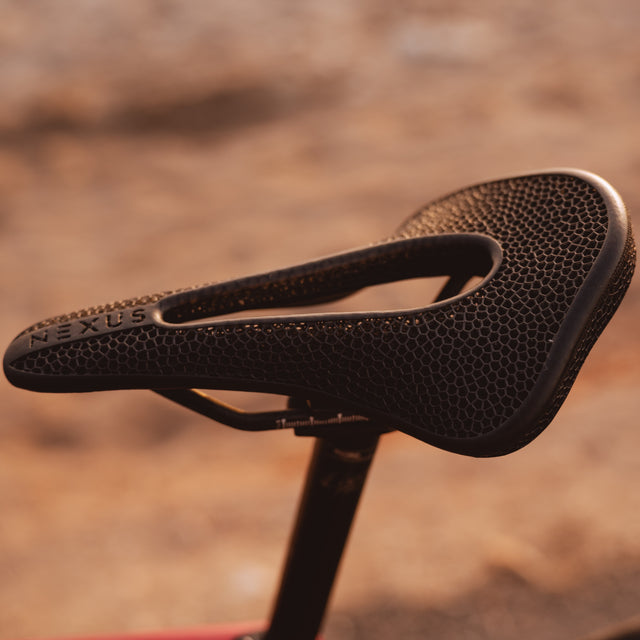
3D printing broke that rule. The Carbon 3D NEXUS Saddle is made in a single piece using Carbon Digital Light Synthesis (DLS) technology in EPU 41 resin, with a Voronoi lattice that deforms exactly where you sit and stays firm where you need support. The result: 145 grams —among the lightest on the market— and still 2 cm of cushioning pad where your body appreciates it.
The key is that the cushioning isn't foam stuck on top that gets squashed over time: it's the structure itself. And because the lattice density can be adjusted to each rider's weight and support area, comfort stops being generic. Less pressure over long hours means more time on the bike without paying the price.
The third contact point is the pedals, through your shoes and cleats. CarboXtrem doesn't make a component here, but the principle deserves a mention because it completes the system: a stiff cockpit and a perfect saddle are no use if power transfer when pedalling is lost in a soft sole or a badly positioned cleat.
Our advice is to treat it with the same logic as the other two: prioritise a stiff sole (one that doesn't dissipate your power) and spend time on cleat adjustment, because a poor foot position is the silent cause of a lot of knee pain. It's the part of the system you control directly; we equip the other two.
| Contact point | What to look for | CarboXtrem solution |
|---|---|---|
| Hands (steering) | Stiffness and aerodynamics | CarboX17 integrated handlebar (T1000 carbon, one piece) |
| Hands (MTB/gravel grip) | Vibration absorption, weight | Race Day Grips (EPU 41, 16 g per set) |
| Seat | Pressure distribution without a weight penalty | NEXUS saddle (DLS, EPU 41, 145 g, 2 cm pad) |
| Feet | Stiff sole and good cleat adjustment | Setup recommendation (third-party component) |
What unites CarboXtrem components isn't just the material but the approach: real customisation. The saddle adjusts its lattice density to your weight; the aerobars and pads are made to fit your biomechanics; the cockpit seeks the stiffness and position you need. All made in Spain and backed by our lifetime warranty.
Because the best bike isn't the one fitted with the most expensive components, but the one that's fine-tuned at the three places where your body touches it.
Three: the hands on the handlebar, the seat on the saddle and the feet on the pedals. They're the only places where your body touches the bike, so all the power and all the comfort pass through them.
In the contact points. A stiff handlebar, a saddle that spreads pressure and a good grip have more impact on a long ride than an expensive component you don't even touch.
It eliminates the stem-handlebar joint, which is what flexes the most. You gain stiffness, aerodynamics and lightness at the same time, as with the CarboX17.
Yes: the NEXUS weighs 145 g and keeps a 2 cm pad thanks to its 3D printed Voronoi lattice.
If you're going to fine-tune your bike through its contact points, the cockpit matters most: it steers, brakes and sets your aerodynamics. The CarboX17 Handlebar brings together stiffness, lightness and an aero profile in a single piece of carbon.
Topics