In the previous article we explained the Carbon DLS technology behind our components. Today we dig into the material that makes it happen: EPU 41.
If you've wondered why our Race Day Grips can stretch up to 3 times their size without breaking, or how a 146-gram saddle can take thousands of kilometres without degrading, the answer lies in this extraordinary material, which Specialized, Adidas and Fizik also use in their premium products.
🔬 Key fact: EPU 41 can stretch up to 300% of its original size without breaking and keeps its elastomeric properties down to -10°C, far outperforming traditional materials such as EVA or standard TPU.
What is EPU 41?
EPU stands for Elastomeric Polyurethane, and 41 designates a specific formulation developed by Carbon3D for high-performance sports applications.
Technical Definition
EPU 41 is a dual-cure thermoset elastomer that combines:
- Part A: Photopolymerisable base resin (UV curing)
- Part B: Thermal curing agent
- Result: A material with superior mechanical properties and dimensional stability
Dual curing process:
- Primary cure (UV): During DLS printing, UV light partially polymerises the material, creating the desired geometric shape
- Secondary cure (thermal): Baking at 120°C for 8 hours completes the chemical reactions and optimises the final properties
Complete Technical Specifications
| Property | Value | Test Standard | Comparison |
|---|---|---|---|
| Shore A hardness | 70 | ASTM D2240 | Similar to an eraser |
| Tensile modulus | 11.5 MPa | ASTM D412 | 2-3x higher than EVA |
| Tensile strength | 8.5 MPa | ASTM D412 | Higher than standard TPU |
| Elongation at break | 300% | ASTM D412 | 2x higher than EVA (150%) |
| Tear strength | 25 kN/m | ASTM D624 | Excellent for extreme use |
| Compression set (70°C, 22h) | 15% | ASTM D395 | Low permanent deformation |
| Glass transition temperature | -20°C | DMA (tan δ peak) | Flexibility in the cold |
| Density | 1.10 g/cm³ | ASTM D792 | Lightness vs strength |
| Energy return | +40% vs TPE | Carbon internal testing | Better dynamic response |
EPU 41 vs Traditional Materials
| Feature | Traditional EVA | Standard TPU | EPU 41 (Carboxtrem) |
|---|---|---|---|
| Elongation | 150% | 200% | ✅ 300% |
| Tear strength | Low (5-10 kN/m) | Medium (15 kN/m) | ✅ High (25 kN/m) |
| Cold behaviour | Rigid <0°C | Loses flexibility | ✅ Flexible down to -10°C |
| Energy return | Low | Medium | ✅ +40% vs standard TPE |
| UV resistance | Low (yellows) | Medium | ✅ High (stable colour) |
| Water absorption | 3-5% | 1-2% | ✅ <0.5% |
| Compression set | High (30-40%) | Medium (20-25%) | ✅ Low (15%) |
| Biocompatibility | Not certified | Variable | ✅ ISO 10993-10 |
| Isotropic properties | No (moulded) | No (extruded) | ✅ Yes (DLS printing) |
Why EPU 41 Is Superior
1. Unique Isotropic Properties
Unlike moulded or extruded materials, EPU 41 made with DLS technology has uniform mechanical properties in every direction:
- No weak planes: No weld lines or joins
- Uniform strength: Same behaviour in X, Y and Z
- Predictability: Computer simulations are more accurate
- Durability: No preferred crack initiation points
2. Exceptional Cyclic Fatigue Resistance
Sports components undergo thousands of compression cycles. EPU 41 stands out for:
Fatigue tests carried out by Carbon3D:
- ✅ 100,000 cycles of 25% compression: No noticeable degradation
- ✅ Property retention: >95% after 50,000 cycles
- ✅ No cracking: Microscopic post-test inspection
- ✅ Comparison: EVA shows cracks after 10,000-20,000 cycles
In practical terms: A cyclist who pedals 3 hours a day at 90 rpm completes roughly 16,200 cycles/day. With EPU 41, components keep their properties through years of intensive use.
3. Superior Thermal Behaviour

EPU 41 keeps its properties across an extraordinary temperature range:
Cold behaviour (-10°C):
- Retains 90% of its elongation
- Stays flexible to absorb impacts
- Ideal for winter or high-mountain cycling
- By contrast: EVA becomes stiff and brittle
Hot behaviour (+70°C):
- Compression set of just 15% after 22h at 70°C
- Doesn't become sticky or excessively soft
- Keeps its shape under prolonged loads
- Resistant to permanent deformation
4. Biocompatibility Certification
EPU 41 has passed rigorous biocompatibility tests under ISO 10993-10:
| Event | Standard | Result |
|---|---|---|
| Cytotoxicity | ISO 10993-5 | ✅ Passed |
| Skin sensitisation | ISO 10993-10 | ✅ Non-sensitising |
| Skin irritation | ISO 10993-10 | ✅ Non-irritant |
| Acute systemic toxicity | ISO 10993-11 | ✅ Passed |
Practical meaning: EPU 41 is safe for prolonged contact with sweaty skin during intense sporting activity, with no risk of allergic reactions or irritation.
Applications of EPU 41 in Our Components
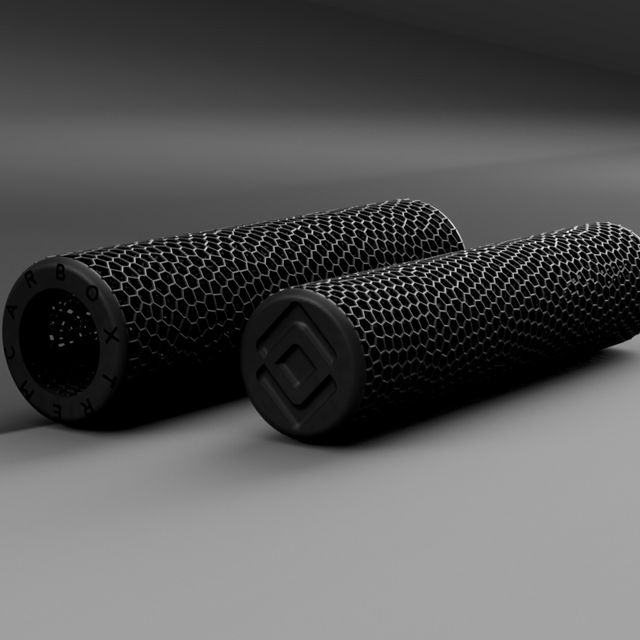
Race Day Grips
Why EPU 41 is ideal for grips:
- Superior grip: Optimal coefficient of friction even with sweat
- Vibration absorption: 300% elongation allows effective compression
- Tear strength: 25 kN/m withstands crashes and scrapes
- Durability: >15,000 km proven with no loss of properties
- Quick drying: Water absorption <0.5% (ideal for triathlon)

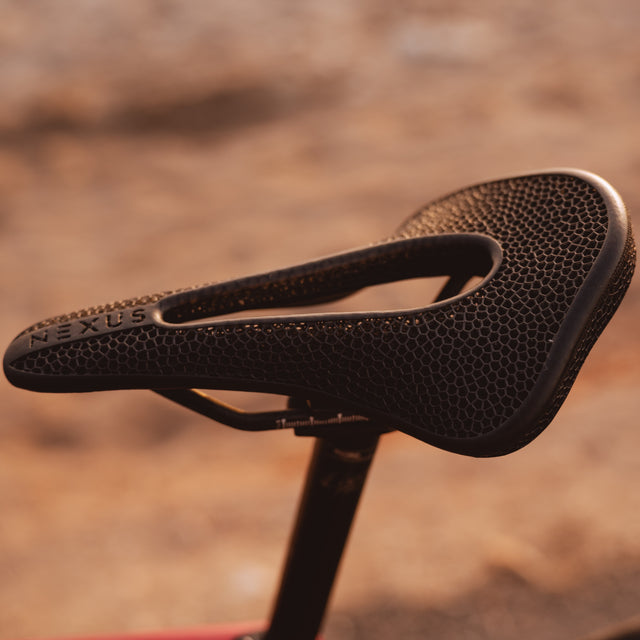
NEXUS 3D Saddle
Why EPU 41 is ideal for saddles:
- Pressure distribution: Low compression set keeps its original shape
- Energy return: +40% vs conventional materials
- Biomechanical customisation: Lattice geometries impossible with other materials
- Breathability: Open Voronoi structures allow airflow
- Weather resistance: UV, water, sweat, temperature

Leading Brands That Trust EPU 41
EPU 41 in the Sports Industry
Specialized
Uses EPU 41 in its premium S-Works Mirror and Power saddles. The ability to create lattice structures customised to each rider's sit bone pressure is only possible with EPU 41 and DLS technology.
Adidas
Adidas's iconic 4D midsole, with its distinctive green lattice structure, is made entirely from EPU 41. Millions of units sold demonstrate the material's durability and performance in demanding applications.
Fizik
Its Adaptive saddles use EPU 41 in strategic areas to combine structural support with dynamic cushioning, impossible to achieve with traditional materials.
Carboxtrem
All our elastomeric components (grips, saddles, arm rests) use EPU 41 exclusively, guaranteeing the same level of quality and performance as the world's most premium brands.
🏆 Market validation: The fact that several leading brands have adopted EPU 41 for high-volume premium products demonstrates the material's maturity, reliability and superior performance.
EPU 41 vs EPU 46: Which to Choose?
Carbon3D offers several EPU materials. The two main ones for cycling are:
| Feature | EPU 41 | EPU 46 |
|---|---|---|
| Shore A hardness | 70 (fixed) | 56-78 (adjustable) |
| Relative stiffness | Base | 100% stiffer |
| Bio-based content | 0% | ✅ 40% bio-based |
| Colour customisation | Black/Green | ✅ Wide range of colours |
| Cleaning process | With solvent | ✅ Solvent-free |
| Product maturity | ✅ Very mature | More recent |
| Best for | Grips, saddles, cushioning | Stiffer structures, aesthetic variety |
At Carboxtrem we mainly use EPU 41 because of its:
- ✅ Proven track record over millions of units
- ✅ Optimal mechanical properties for cycling
- ✅ Field-proven durability
- ✅ Well-documented characteristics
We will consider EPU 46 for future product lines where sustainability (40% bio-based) and colour customisation are priorities.
Maintenance and Care of EPU 41 Components
Recommended Cleaning
✅ DO:
- Wash with warm water and neutral soap
- Air-dry or dry with a soft cloth
- Clean after every ride in muddy conditions
- Inspect visually from time to time
❌ DON'T:
- Use aggressive solvents (acetone, petrol)
- Expose to direct heat >80°C for long periods
- Use wire-bristle brushes
- Apply silicone-based products
Expected Service Life
Durability data based on real-world use:
- Race Day Grips: >15,000 km or 3-5 years of regular use
- NEXUS 3D Saddle: >20,000 km or 5-7 years of regular use
- Arm rests: >10,000 km or 4-6 years of triathlon use
Influencing factors: Intensity of use, prolonged UV exposure, improper cleaning, storage in extreme conditions.
Storage
Optimal conditions:
- Temperature: 15-25°C
- Humidity: 40-60%
- Avoid prolonged direct sunlight
- Don't compress during long-term storage
- Away from aggressive chemicals
Frequently Asked Questions about EPU 41
EPU 41 is a thermoset material, which means that once fully cured, its properties are very stable. Under normal conditions of use and storage, degradation is minimal. Our internal tests and user feedback show that components with >3 years of use retain >90% of their original properties. EPU 41's UV resistance is excellent, with minimal colour change after prolonged exposure.
Because of EPU 41's thermoset nature and dual curing process, it isn't possible to repair components by heat welding or conventional adhesives. However, the material's high tear strength (25 kN/m) makes severe damage extremely rare. In the event of accidental damage, contact us to assess replacement options under warranty.
Current EPU 41 has no bio-based content; however: 1) Its exceptional durability reduces replacement frequency compared with traditional materials, 2) The DLS process generates less waste than mould-based manufacturing, 3) Carbon3D is working on chemical recycling programmes for cured elastomers, 4) The EPU 46 version (40% bio-based) represents the more sustainable future of the EPU family. At Carboxtrem we are committed to exploring circular economy options for our components.
The higher cost of EPU 41 reflects: 1) Carbon3D's intensive R&D to develop the material, 2) A DLS manufacturing process that is more complex than traditional moulding, 3) High-purity raw materials to guarantee biocompatibility, 4) Specialised post-processing (controlled thermal curing), 5) Rigorous ISO certifications. However, considering its 3-5x greater durability, total customisation and unmatched performance, the cost per kilometre is comparable to or lower than traditional premium products.
The Future of EPU Materials
Carbon3D continues to innovate in the EPU material family:
EPU Pro Platform
A new generation of single-part elastomers (no two-component mixing needed) that simplify the manufacturing process while keeping premium properties. Features:
- Simpler, more efficient processing
- Wider hardness range (50A-90A)
- Solvent-free cleaning
- New textures and haptics
Higher Bio-Based Content
Carbon3D is working to increase the share of renewable raw materials in all its EPU materials, aiming to reach >50% bio-based in upcoming formulations without compromising mechanical properties.
Improved Recyclability
Active research into chemical recycling processes that make it possible to recover monomers from cured elastomers, closing the material's life cycle.
Conclusion
EPU 41 isn't just another elastomer. It's the result of years of research and development by Carbon3D, optimised specifically for high-performance applications where durability, performance and safety are critical.
Its unique properties:
- ✨ 300% elongation without breaking
- ✨ Isotropic properties thanks to DLS
- ✨ Exceptional resistance to cyclic fatigue
- ✨ Superior thermal behaviour (-10°C to +70°C)
- ✨ ISO 10993-10 biocompatibility certification
- ✨ +40% energy return vs conventional materials
These are the reasons why brands such as Specialized, Adidas, Fizik and Carboxtrem trust this material for their most premium products.
At Carboxtrem, EPU 41 isn't just a material: it's the foundation that makes it possible to create components combining extreme lightness, exceptional durability and total customisation.
Resources and Links
Official technical specifications of the material
🌱 EPU 46 - Carbon3DSustainable material with 40% bio-based content
📄 Carboxtrem Case StudyOfficial Carbon3D publication
🔬 Previous ArticleWhat Carbon DLS Technology Is
🛒 Race Day GripsMade with EPU 41
🛒 NEXUS 3D SaddleEPU 41 + carbon base
Questions about EPU 41 or Our Materials?
Our technical team is available to answer any questions about materials, mechanical properties or specific applications.
Technical article published on 25 November 2024 by the Carboxtrem technical team. Information verified against Carbon3D's official specifications and internal testing.