CarboXtrem TT Aerobars
€890,00
CARBOXTREM
Pre-launches, custom-fit tips and offers for your bike. No spam: only what is worth it.
Already have an account? Sign in12/09/2026 · Alfonso Lopez Pe

There is a scene that repeats itself at every local time trial. Someone arrives with barely enough time, pins on their number, rides round the block twice and lines up on the start ramp. Three minutes into the race their legs are burning, their breathing is out of control and they feel it just isn't their day. It almost always was. What they haven't done is prepare their body for what they were about to ask of it.
Warming up has a reputation as a formality, and on a long, easy ride it is: the first few kilometres do that job on their own. But in short, intense events the logic flips. The shorter and harder the effort, the more it matters to reach the start with your body already up and running, because there is no time to recover what you lose in the first few minutes.
In this article we look at what a warm-up really does, how long to spend on it depending on the event, a sample protocol for a time trial, what changes in triathlon and one detail almost nobody works on: the aero position needs warming up too.

A warm muscle works better than a cold one. With a slightly higher temperature, the chemical reactions that produce energy run faster, fibres contract more quickly and tissues lose stiffness. Scientific reviews on warm-ups, such as David Bishop's published in Sports Medicine in 2003, rank this temperature effect among the main drivers of improved performance in short efforts.
When you go straight from standing still to an intense effort, oxygen consumption doesn't rise instantly: it takes a while to reach what the intensity demands. Meanwhile, the missing energy comes from pathways that don't rely on oxygen, which run out quickly and generate fatigue. It's the feeling of having started "out of breath" and dragging that debt for the rest of the event.
Exercise physiology has studied at length how to shorten that lag. Including a few efforts of some intensity in the warm-up, known as priming, makes oxygen consumption respond faster in the effort that follows. Translated to the road: the first minutes of the time trial feel more under control.
A warm-up doesn't get you fit or fix poor pacing. And it has a clear limit: if it is too long or too intense, you start the event with some of your energy already spent. Warming up isn't training.
There is no single protocol, but there is one idea that organises everything: warm-up duration goes in the opposite direction to event duration. This table is a guide and should be adjusted to your experience and to what works for you in training:
| Event | Suggested warm-up | How to approach it |
|---|---|---|
| Prologue or short time trial (under 30 min) | 20-30 minutes | Easy, progressive and several short efforts at race pace |
| 30 to 60-minute time trial | 15-25 minutes | Easy, progressive and one or two short efforts |
| Sprint or Olympic triathlon | Activation in the water and on land | The bike leg starts progressively after the swim |
| Middle or long distance | Brief activation | The moderate starting pace itself acts as the warm-up |
| Long training ride | The first 15-20 minutes | Ride easy before adding intensity |
For a short or medium time trial, this structure is a good starting point. Times are approximate:
At many events people warm up on a turbo trainer next to the car or tent, and it makes sense: you control intensities, you don't depend on traffic and you don't wander away from the start. If you warm up on the road, respect the organisers' rules about the course and don't count on being able to do your efforts on any stretch.

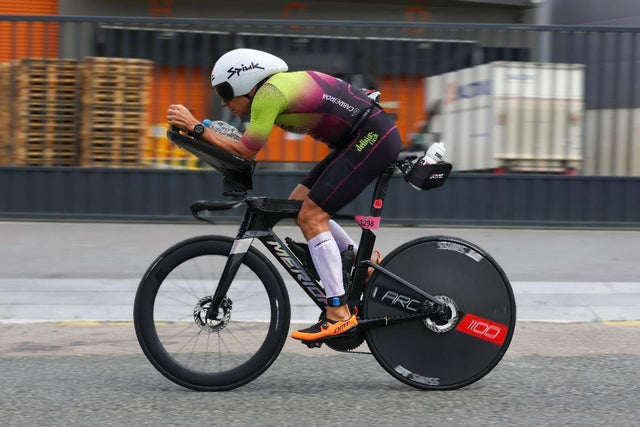
This is the most forgotten detail. Many people do their whole warm-up sitting up, with their hands on the levers or the base bar, and only get down on the aerobars at the start. The problem is that the aero position isn't the same bike with a different posture: it closes the hip angle, loads the neck, lower back and shoulders, and changes which muscles work in each pedal stroke.
If those muscles go cold into that posture, the first minutes of the time trial feel stiff, and it's easy for power to drop just when you should be settling in. The solution is simple: do a good part of the progressive section and all the short efforts on the aerobars. That way you reach the start with your legs and your posture ready at the same time.
If you still struggle to stay tucked for long, that is worked on in training, not on race day. We explain it step by step in how to get used to the aero position, and if what you get is tingling in your arms, in why your forearms go numb in the aero position.
In triathlon you can't warm up on the bike just before riding, because you swim first. That changes the approach:
Always check the event schedule: the time transition closes and whether there is warm-up time in the water shape everything else.

As a guide, 20 to 30 minutes for a short time trial and 15 to 25 minutes for one of 30 to 60 minutes. The shorter and more intense the event, the more it matters to reach the start with your body already up and running. The usual structure is to ride easy, build progressively, do two or three short efforts at race pace and finish with a few easy minutes.
A brief activation is enough. In middle and long distance the starting pace is moderate and the event itself acts as the warm-up. In short distances, such as sprint or Olympic, it is worth activating on land and, if allowed, swimming for a few minutes before the start.
The sensible thing is to finish 5 to 10 minutes before your start time. If you wait much longer, your body cools down and much of the effect is lost. While you wait, stay warm and don't stand still.
A turbo trainer lets you control intensities, doesn't depend on traffic and keeps you close to the start, which is why it is the most common option for time trials. You can also do it on the road, always respecting the organisers' rules and open traffic.
Yes, but short and few. Two or three efforts of 30 seconds to a minute at race pace help oxygen consumption respond faster when you start. More of them, or longer ones, can leave you tired before the start.
A good warm-up prepares the engine, but the time trial is ridden in a specific posture, and that posture also has to be ready from the first minute. The less you have to fight with it, the sooner the pace comes.
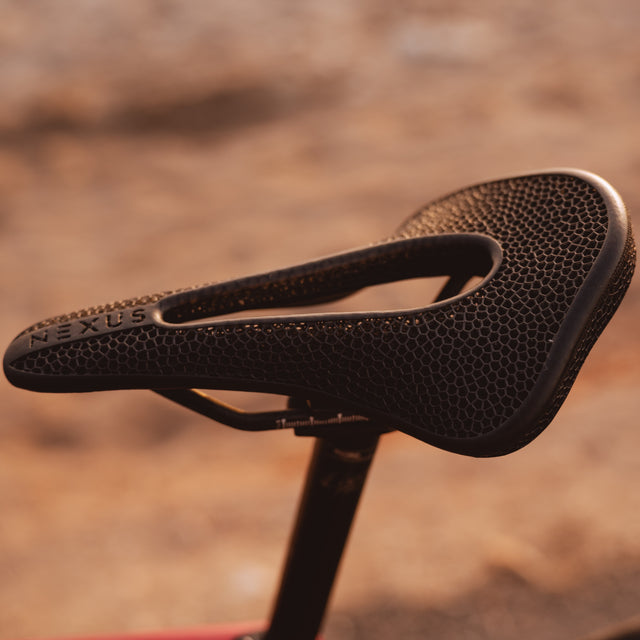
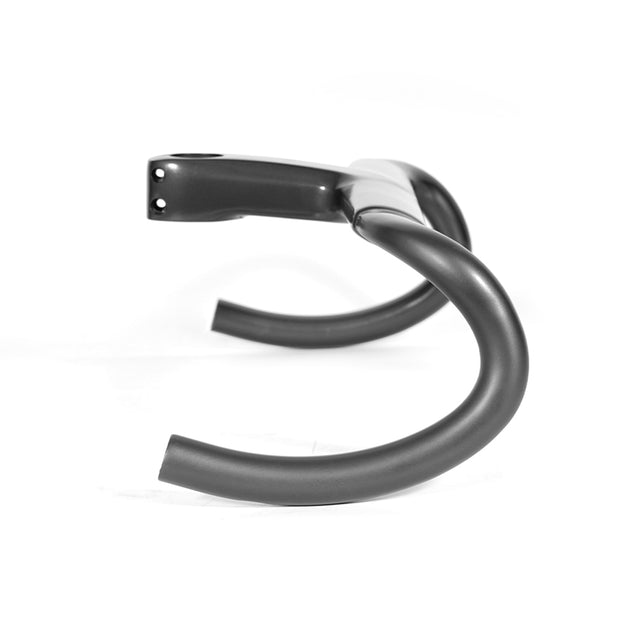
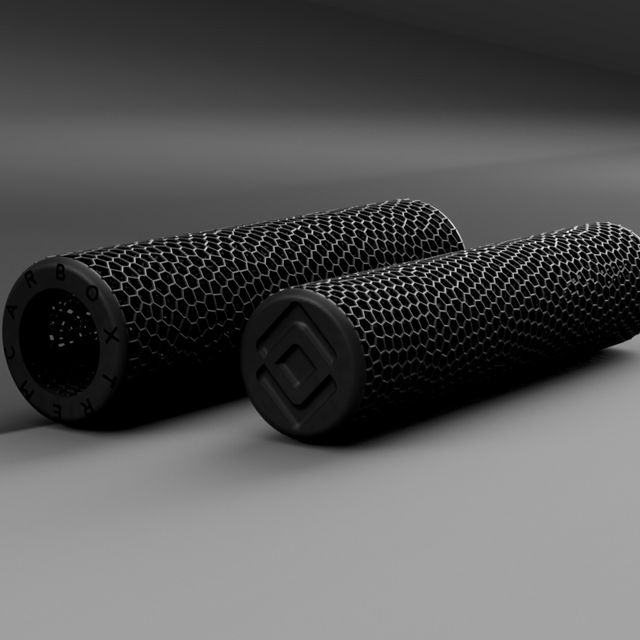
That is why CarboXtrem TT Aerobars are made to measure, adjusting length, width and geometry to your measurements, with a body in hand-laid carbon fibre, 30° grips to keep the wrist at a neutral angle and 3D lattice pads on the elbow rests.
Topics