CarboXtrem TT Aerobars
€890,00
CARBOXTREM
Pre-launches, custom-fit tips and offers for your bike. No spam: only what is worth it.
Already have an account? Sign in19/08/2026 · Alfonso Lopez Pe

Getting down on the aerobars is no mystery: you rest your forearms, bring your hands together and you're in an aerodynamic position. The hard part comes ten minutes later, when your neck starts to complain, your lower back sends a warning and that urge to sit up "just for a moment" appears, and then keeps coming back every two kilometres.
That is what separates a pretty aero position from a useful one. A super-narrow frontal area is little use if you can only hold it for twenty minutes, because on the day that really matters you will spend hours up there. The good news is that the ability to hold the position can be trained, just like power or endurance. And like everything that is trained, it has its method, its progression and its classic mistakes.
In this guide we look at what you are really asking of your body when you go down on the aerobars, how to build adaptation in blocks without ending up sore, which aches are part of the process and which are a warning that the problem isn't your body, but how the bike is set up or the surface you are resting on.

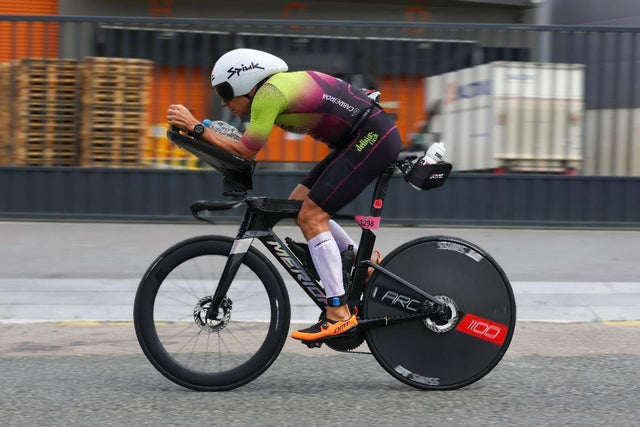
The aero position isn't simply "riding lower". It is a posture in which several structures work in a way they are not used to if you come from road riding with your hands on the tops of the bar.
When you rotate the pelvis forward to lower the torso, the angle between thigh and torso closes. The hip flexors work in a shorter range and, if mobility is limited, the pelvis tends to "slip" backwards: you end up sitting on top of the saddle instead of into it, and that is where perineal discomfort begins.
With the torso almost horizontal, looking at the road forces you to extend your neck. The neck and trapezius muscles have to work isometrically and continuously. It is, by far, the number one complaint of people starting out in time trials.
In a road position you spread your weight between hands, wrists and shoulders. In aero, a large part of that weight goes straight down onto a small surface: the ulna area, just below the elbow. If that surface is small or hard, pressure concentrates and the tingling and numbness we analyse in depth in why your forearm decides your long-distance race appear.
With the diaphragm compressed, the breathing pattern changes. Many riders notice that at the same power they breathe "less comfortably" for the first few weeks. This also adapts, but it explains why at first perceived effort is higher even though the power meter says the same.
Conclusion: when you go aero you don't just change your aerodynamics, you change how load is distributed across your whole body. That is why adaptation isn't a matter of willpower, but of repeated, progressive exposure.
There is no universal figure, and be wary of anyone who gives you one: it depends on your starting mobility, how many years you have been riding, how aggressive the position is and how often you practise it. What is constant is the order in which the improvements arrive.
That last idea is important: if your only reference is "I'm slower in aero", you may be measuring adaptation rather than position. Give it weeks before drawing conclusions.
The most frequent mistake is trying to do the whole ride in aero from day one. You manage it once, end up with neck pain and are left feeling that "this position isn't for me". The alternative is to treat the position like any other training load: small, repeated and increasing doses.
Flat or gently rolling, good tarmac, little traffic and no tricky corners. The first blocks aren't about going fast, they're about your body learning the posture without also having to manage balance and brakes.
Several short blocks within a ride pay off far more than a single long block. Increase the total accumulated time in aero gradually from week to week, and do it by lengthening each block before adding more sessions.
This is the golden rule. If you wait until your neck is burning to sit up, you are training discomfort. Finish each block feeling you could have kept going a little longer: that way your nervous system associates the position with something sustainable and progress continues without setbacks.
Drinking, grabbing food, looking back, coming off the aerobars for a roundabout and getting back on. In a race those movements happen dozens of times, and doing them smoothly is part of being comfortable in the position.
Hip and thoracic spine mobility, and some strength work for the deep core and neck muscles. You don't need a complex programme: a little, consistently, is worth more than a heroic session every fortnight.
If you change the aerobar height, the extension angle and the saddle setback all at once, you won't know what improved things and what made them worse. Change one thing, do several rides with it and only then move on to the next. The same principle we apply to saddle height.

Telling "this is adaptation" from "this is a warning" saves wasted weeks. As a general guide:
| Sign | What it usually means | What to do |
|---|---|---|
| Tight neck and traps after the ride that go away within hours | New load on under-trained muscles | Normal at first. Progress slowly and work on thoracic mobility |
| Lower back stiffness in the first few days | Adapting to the new pelvic rotation | Normal if it disappears quickly. If it persists, check the position |
| Tingling in hands or forearms that always appears in the same spot | Pressure concentrated on a small or badly placed support surface | Not adaptation: check the rest and the aerobar spacing |
| Pain that grows ride after ride instead of easing | The position doesn't suit your body as it is now | Stop progressing and have the fit checked by a professional |
| Perineal pressure or numbness in the saddle area | Excessive pelvic rotation or a saddle unsuited to the aero position | Adjust the saddle (height, setback, tilt) before continuing |
| Any sharp joint pain or pain that doesn't ease with rest | Outside the realm of adaptation | See a healthcare professional or a bike fitter |
The rule in a nutshell: what improves over the weeks is adaptation; what gets worse is a fit or equipment problem.
There comes a point where persisting no longer makes sense. If you have had weeks of orderly progression and the same ache keeps appearing in the same place, the problem is no longer adaptation.
The two usual suspects are the fit (height and spacing of the extensions, angle, saddle setback) and the surface your forearm rests on. The first is solved with patience and, if you can, a good bike fit; you can start with the steps we detail in how to fit and adjust time trial aerobars.
The second is quieter, because hardly anyone questions it: people assume a rest is a rest. But a small rubber pad concentrates the weight of your upper body on a few square centimetres, and that pressure can't be trained. It just becomes harder to bear with every hour that passes.
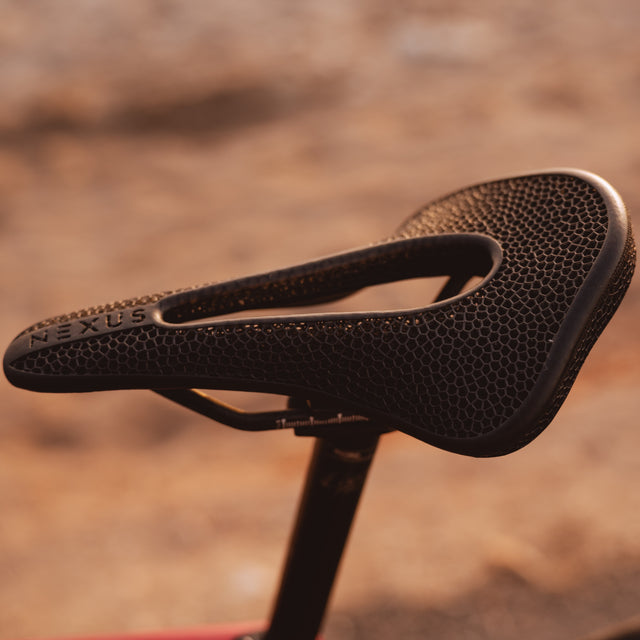
Our large-format triathlon arm rests tackle exactly that point: 220 x 100 mm of continuous surface, so the forearm spreads its load instead of digging in, and a 3D Pad —from the same family as the padding on high-end saddles— instead of the usual EVA foam. They are designed for time trial and triathlon bikes, and fit most brands on the market (Tririg, Deda and the like).
It is worth not mixing products: if you ride a road bike with clip-on aerobars, the right rest for you is the standard pads of the aerobars, not the large TT format. If you're unsure which suits your setup, message us and we'll tell you, no strings attached.
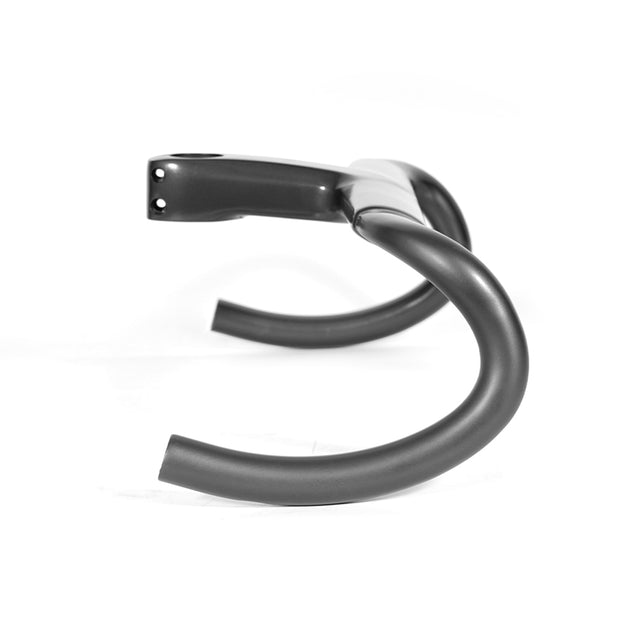
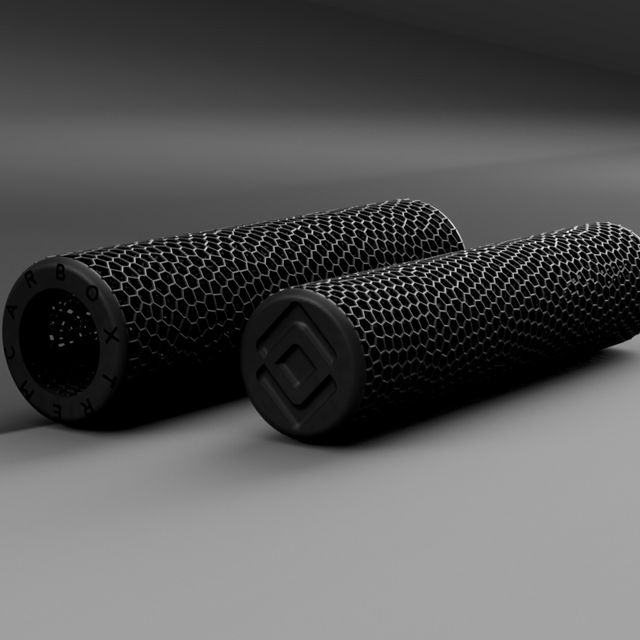
There are cases where the problem is at the source: extensions that are too long or too short force you to compensate with your shoulders and neck, and no amount of progression fixes that. The CarboXtrem Custom Aero Aerobars are built from your measurements —including the real length of your arm—, with a hand-laid carbon structure and 3D lattice pads in Carbon EPU whose density is tuned to the rider. The logic is the opposite of a standard size: instead of adapting your body to the component, the component is made starting from your body.
And if you are deciding between fitting aerobars to your road bike or moving to a TT bike, we have the full analysis in time trial bike or road bike with aerobars.
| Aspect | Recommendation |
|---|---|
| Work format | Short, repeated blocks within the ride, not whole rides |
| Terrain | Flat or gently rolling, good tarmac and little traffic at first |
| Progression | Increase accumulated time in aero gradually, week by week |
| Key rule | Come off the aerobars before pain appears, never after |
| Off the bike | Hip and thoracic mobility, core and neck strength |
| Adjustments | One change at a time, and several rides before judging it |
| Warning sign | Discomfort that grows ride after ride or always in the same spot |
| Forearm rest | Wide, continuous surface; on TT bikes, 220 x 100 mm with 3D Pad |
There is no universal figure: it depends on your mobility, your previous experience and how aggressive the position is. What is constant is the order: first neck and shoulder tolerance improves, then comfort on the forearm rest and, last of all, the ability to produce power in the closed position.
Yes. With the diaphragm compressed and the hip more closed, perceived effort goes up and many riders perform a little worse in aero than sitting up during the first few weeks. Power in the position is the last thing to adapt, so it is best not to draw conclusions too soon.
Several short blocks repeated within the ride are better than a single long block, increasing accumulated time gradually from one week to the next. The practical rule is to come off the aerobars before discomfort appears, not after: if you wait for the pain, you are training the discomfort.
No. Tingling that always appears in the same spot indicates pressure concentrated on a small or badly placed support surface, and that can't be trained. Check the spacing and height of the aerobars and, above all, the size of the rest: a large-format arm rest spreads the weight of the upper body over a much larger surface.
No. The 220 x 100 mm large-format arm rests are designed for time trial and triathlon bikes. For a road bike with clip-on aerobars, the right choice is the aerobars' standard arm rest pads. If you're unsure about your setup, message us and we'll tell you which one fits.
When the discomfort grows ride after ride instead of easing, or when it always appears in exactly the same spot. What improves over the weeks is adaptation; what gets worse is a fit or equipment problem, and that's when it's worth having your position checked by a professional.
The aero position is won through repeated exposure, not through willpower on race day. Short blocks, orderly progression, one change at a time and the discipline to come off the aerobars before it hurts. With that, most riders go from lasting minutes to holding it for hours.
And when adaptation stalls, there is almost always a specific explanation: measurements that aren't yours or a rest that concentrates load where it should spread it. Training more doesn't fix that; fitting the right equipment does.
Want a position you can hold for hours? Discover the large-format triathlon arm rests or tell us about your case and we'll design your custom aero aerobars from your own measurements.
Topics