CarboXtrem TT Aerobars
€890,00
CARBOXTREM
Pre-launches, custom-fit tips and offers for your bike. No spam: only what is worth it.
Already have an account? Sign in28/08/2026 · Alfonso Lopez Pe

Ask ten cyclists how much water they drank on a long summer ride and almost all of them will say the same: "less than I should have". Not because they weren't thirsty, or because they didn't carry bottles. But because at some point drinking stopped being convenient: the road got technical, the group upped the pace, the bottle was in the lower cage, and that sip was put off "until the next rise".
Hydration on the bike is almost always explained from a physiology point of view, which is how it ends up as an abstract number nobody applies. This article goes the other way: how much you really need, how you can find out for yourself and what has to happen on your bike for that plan to actually work.

The figure you see everywhere —half a litre to a litre per hour— isn't false, but it's an average of very different people riding in very different conditions. Your real need depends on at least five things:
There's a home method that works well and costs nothing. You need a set of scales:
Example: you lose 1 kg in two hours and during that time you drank 1 litre. You've lost 2 litres in total, that is, one litre per hour. Repeat the test a couple of times, on different days, and you'll have a number that applies to you and not to the average of a study.
Thirst is a useful warning, but it isn't an early one: by the time it hits hard, you've been in deficit for a while. These other signs usually come first:
And one that almost nobody checks: the colour of your urine before you set off. Starting a four-hour ride already dehydrated is a disadvantage you can't make up by drinking along the way.
In August and September two things come together: longer rides (end of the holidays, preparing autumn goals) and a body that has spent the whole summer acclimatising. That body performs better in the heat, but it also sweats sooner and sweats more. The practical consequence is that the last long rides of summer are often the worst managed: people rely on habit and set off with the same water as in June.
The sensible plan is the opposite: in the last hour of a long, hot ride you should have drunk more, not less. And for that you have to start early.
Sweat doesn't just take water with it, it takes salts, and sodium is the main one. If on a ride of many hours you replace only water, you can end up diluting your own internal environment: that explains the feeling of drinking constantly and still having a dry mouth, the late cramps and that heavy stomach at the end.
The practical rule is simple: on rides of less than an hour and a half, water. Beyond that, either carry a drink with salts, or alternate a bottle of water with one of sports drink. There's no need to complicate it further for 90% of rides.
A hydration plan is also a logistics problem. These are the real options and what each one gives you and takes away:
| Where | Typical capacity | Pros | Cons |
|---|---|---|---|
| Frame bottle cages | One or two bottles | Universal, cheap, easy to refill | You have to let go with one hand and look down; in the aero position it forces you to sit up |
| Bottle behind the saddle | One or two bottles | Frees up the frame, little aerodynamic impact | Done blind, awkward to put back, prone to ejecting on rough surfaces |
| Reservoir between the aerobars | One front reservoir | You drink through a tube without leaving your position or letting go of the rest | Requires aerobars fitted; for TT, triathlon or road bikes with clip-ons |
| Hydration backpack | 1.5 – 3 litres | Lots of volume and a drink always at hand | Weight on your back, heat and sweat; impractical on the road |
| Bottle in a handlebar / frame bag | One | Useful for gravel and bikepacking, good access | Takes up luggage space and shifts weight forward |
Here is the point almost no hydration article mentions: you drink according to how easy it is to drink. Not according to what you planned at home.
Think about the whole movement, not just the sip. You let go with one hand. You look down. You feel for the bottle without fully seeing it. You pull it out of the cage. You drink with one hand on the handlebar. And then comes the part that gets put off the most: putting it back, which almost always means looking. On a quiet flat road that's nothing. On a descent, in a tight group or in a crosswind, it's a decision that gets postponed. And one that's postponed three times never gets made.
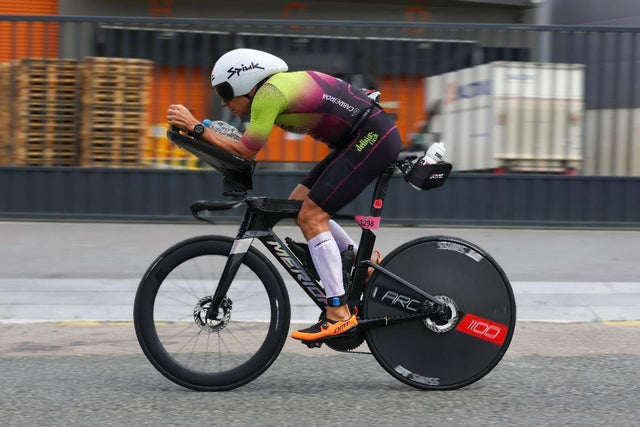
If you also ride in the aero position, the cost jumps, because you don't just let go with one hand: you take a forearm off the rest, sit up, break the frontal position you've been holding for hours and then have to settle back in. Drinking goes from being a movement to being an interruption. We explain it in more detail in why drinking without leaving the aero position makes you faster.

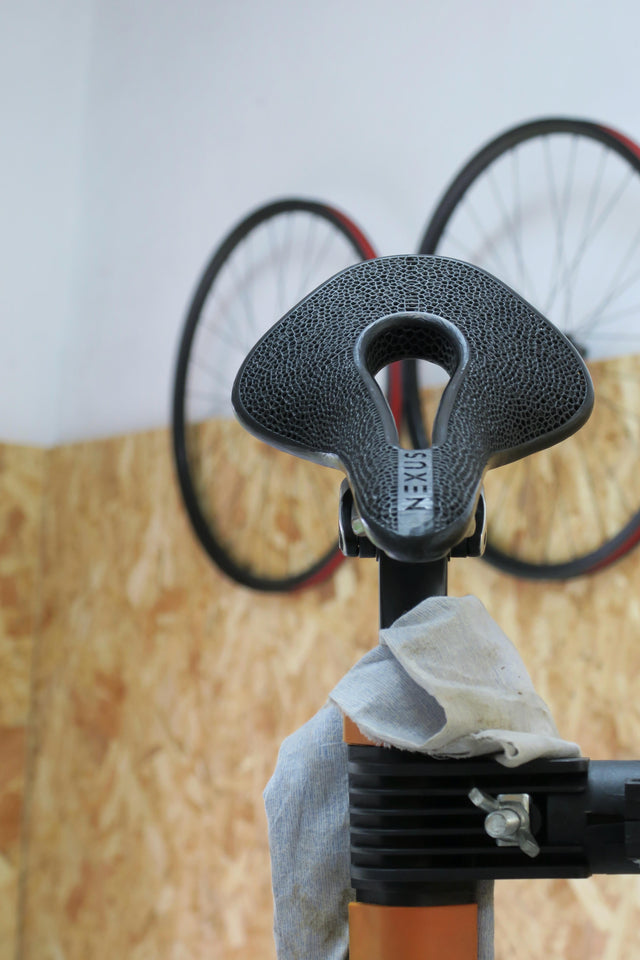
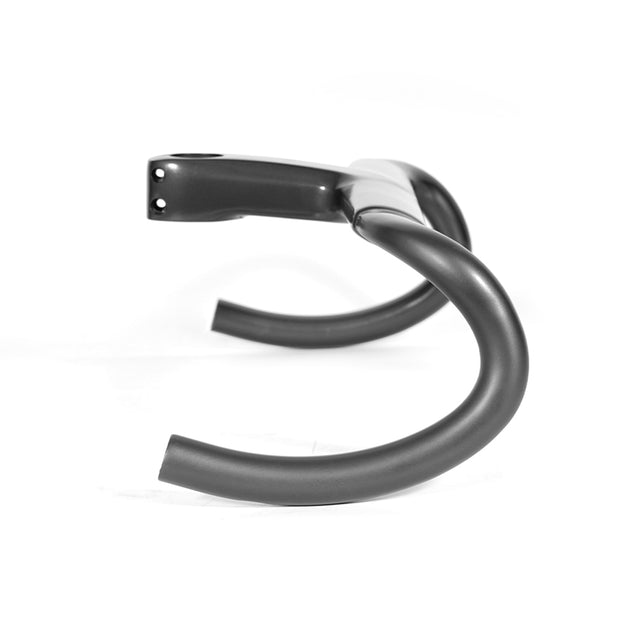
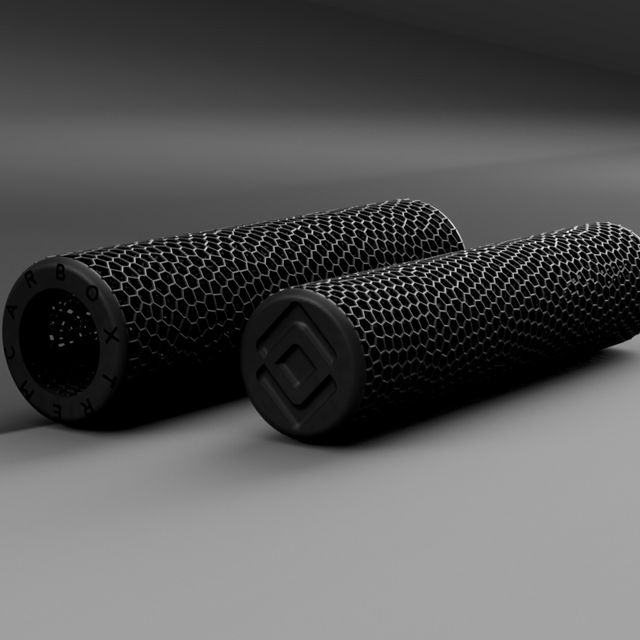
That's why the CarboXtrem Bottle Holder Kit exists: a carbon fibre structure that carries the reservoir up front, between the aerobars, with integrated elbow rests and a drinking tube at mouth height. You drink without taking your arms off the rests, without letting go with one hand and without taking your eyes off the road. The elbow pads are 3D-printed EPU 41 —the same family of elastomeric material from Carbon used in the lattices on our aerobars—, so the rest gives under your elbow and recovers its shape instead of flattening. It's compatible with all our aerobar models and includes the bottle.
With all of the above, a realistic plan for a summer ride looks like this:
| Duration | What to carry | How to spread it |
|---|---|---|
| Less than 1 h 30 | One bottle of water | A sip every 15–20 min, without overthinking it |
| 2 – 3 h | Two bottles: one water, one with salts | Start drinking within the first 20 minutes, alternating |
| 4 h or more, in the heat | Two bottles + refill point located before you set off | Drink at fixed intervals (your bike computer can remind you) and refill before running empty |
| Time trial, triathlon or aero road riding | Front reservoir between aerobars + backup frame bottle | Short, frequent sips from the tube, without breaking position |
If you recognise yourself in this —you drink little precisely when you're on the aerobars, and drink well when your hands are up top—, the adjustment you need probably isn't about hydration, but about position and support. An aero position you can't hold comfortably breaks down for many reasons, and thirst is just the most common. We've written about that in how to get used to the aero position without paying the price and in what to do about numb forearms and sore elbows.
As a general guide, somewhere between half a litre and a litre per hour, but the figure varies a lot depending on the person, the heat, the humidity and the intensity. The reliable way to find yours is to measure your sweat rate: weigh yourself before and after a ride, note what you drank and divide by the hours.
For rides of less than an hour and a half, water is enough. Beyond that it's worth replacing sodium, with a sports drink or by alternating a bottle of water with one with salts, because sweat doesn't just take water.
Because the movement is costly: taking a forearm off the rest, sitting up, finding the bottle, drinking with one hand and settling back in. In the end the sip gets put off. A front reservoir between the aerobars with a drinking tube removes that cost.
Two bottles cover most two- to three-hour rides. From four hours in the heat, what matters isn't how many you carry, but having your refill points located and refilling before you run out of water.
If you train or race on aerobars, the best hydration plan is the one that doesn't force you to sit up. The CarboXtrem Bottle Holder Kit carries the reservoir up front, between the extensions, with integrated elbow rests and a drinking tube, and it mounts on any of our aerobar models.
Topics